The "Why" We Buy vs. The "How" We Live: Navigating Consumer Contradictions in Marketing
We’ve all heard it, and many of us in the marketing world have built strategies around it: “People don’t buy what you do; they buy why you do it.” Simon Sinek’s powerful "Start with Why" concept has revolutionized how brands think about their purpose and how they connect with their audience on a values-driven level. It suggests that the most successful brands resonate because they tap into our core beliefs, our identity, our "why."
But let's be honest. Look around. Look at your own habits. Do we always act on our “why”?
We live in an age brimming with fascinating, and often baffling, contradictions:
We champion sustainability, meticulously sorting our recycling and opting for reusable coffee cups, yet the allure of a $10 t-shirt in the latest fast-fashion haul proves irresistible.
We yearn for a digital detox, lamenting the hours lost to screens, yet find ourselves endlessly scrolling through social media feeds, caught in the dopamine loop.
We admire the clean lines and intentionality of minimalist brands, aspiring to a 'less is more' aesthetic, while simultaneously chasing maximalist lifestyles, filling our homes and lives with more.
These aren't just isolated quirks; they are fundamental patterns in modern consumer behavior. These contradictions highlight a significant gap – the often-surprising chasm between what we say we value and what actually drives our actions and purchasing decisions.
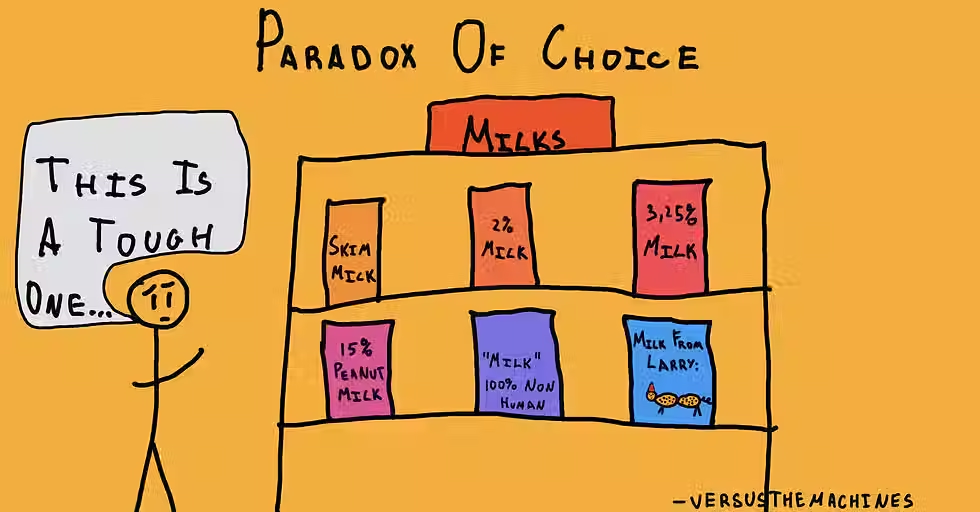
A Goldmine for Marketing Analysis
For a Marketing Analyst like myself, these contradictions aren't problems to be solved or inconsistencies to be ignored. They are a goldmine. They are the cracks in the facade that reveal the complex, often subconscious, motivations, pressures, and desires that truly influence consumers. Understanding these gaps allows us to move beyond surface-level demographics and psychographics into the realm of deep Consumer Insights and Brand Psychology.
Why do these contradictions exist?
Cognitive Dissonance: We strive for internal consistency, but when our beliefs and actions clash, it creates discomfort. We often rationalize our contradictory behaviour rather than change it.
Social Pressure vs. Personal Desire: We might publicly support ethical causes but privately succumb to trends or convenience.
Cost & Convenience: Sometimes, the 'why' (e.g., buying sustainably) comes with a higher price tag or requires more effort, pushing us towards the easier, albeit contradictory, option.
Emotional Needs: The 'high' of a new purchase or the 'fear of missing out' (FOMO) fueled by social media can temporarily override our deeper values.
The Role of Digital Marketing and Brand Management
This is where Digital Marketing and Brand Management come into play. In the digital landscape, these contradictions are amplified. We see curated minimalist feeds alongside extravagant 'haul' videos. Brands promoting wellness apps share digital space with platforms designed for endless engagement.
This presents a critical question for marketers and brand managers: Are brands genuinely trying to solve these contradictions for consumers, or are they simply amplifying them for commercial gain?
Think about it:
Does a fast-fashion brand's 'conscious collection' truly address sustainability concerns, or does it offer a 'guilt-free' pass to continue consuming at an unsustainable rate?
Do social media platforms' 'take a break' reminders genuinely encourage digital well-being, or are they a token gesture within an ecosystem built on addiction?
Do brands that co-opt minimalist aesthetics truly endorse a 'less is more' philosophy, or are they just selling another 'look'?
Leveraging these contradictions requires a delicate touch. It’s an opportunity to:
Acknowledge the Tension: Brands can build trust by showing they understand these internal conflicts. Instead of pretending the contradiction doesn't exist, they can address it head-on.
Offer Bridges, Not Just Band-Aids: Can your brand genuinely help consumers align their actions with their values? This requires Brand Innovation and a commitment that goes beyond marketing campaigns. It involves re-evaluating supply chains, product design, and business models.
Communicate Authentically: Avoid 'greenwashing' or 'wokewashing'. Consumers, especially younger generations, are increasingly adept at spotting inauthenticity. A brand that truly understands and addresses these paradoxes in its core operations will resonate far more deeply.
My Take: The Marketer's Responsibility
As someone passionate about Marketing Strategy, I believe our role isn't just to exploit these gaps but to understand them with empathy. By applying rigorous Marketing Analysis, we can uncover the real needs and tensions consumers face. Through strategic Digital Marketing, we can reach them with messages that acknowledge this complexity. And through thoughtful Brand Management, we can build brands that either help consumers navigate these contradictions or, at the very least, are honest about the role they play.
The most successful brands of the future won't just sell a "why"; they will understand the whys behind our contradictory whats. They will engage with the beautiful, messy, and often paradoxical reality of human behaviour.
So, let me ask you again: Are brands solving contradictions, or just amplifying them? What examples have you seen? Share your thoughts in the comments below!


Comments